
Email: [email protected] | Call us: 01744520110 | 
Sustainable Gym Flooring Options UK
Choosing sustainable gym flooring delivers measurable benefits for operators, athletes and the environment through lower embodied carbon, longer lifespans and easier end‑of‑life management. In the UK market, options span recycled rubber, natural materials and reclaimed products that meet the demands of commercial fitness spaces while aligning with BREEAM, UKCA and other procurement standards. The right choice reduces maintenance cost, improves safety and supports corporate sustainability targets without compromising performance.
Materials, performance and durability across options
Recycled rubber remains the dominant sustainable choice for high‑impact areas because it combines shock absorption with longevity and low maintenance. Virgin natural rubber alternatives perform well in premium studios where elasticity and natural provenance matter. Cork and linoleum offer low VOCs and renewable feedstocks for studios focused on light‑duty use and wellbeing. Bamboo and engineered wood bring a warmer aesthetic and a favorable strength‑to‑weight ratio but require specification for moisture resistance in changing humidity. Hemp‑based and other bio‑resins are emerging options for low‑carbon resilient floors, while reclaimed wood and carpet tiles made from recycled fibres deliver strong circularity when matched to use patterns.
Midway through this section is a comparative summary that helps procurement teams weigh cost, lifespan and certification. Values below reflect typical UK market ranges in British pounds per square metre and representative lifespans under commercial gym use.
| Material category | Typical cost (£/m²) | Typical lifespan (years) | Recycled content or renewability | Typical certifications and notes |
|---|---|---|---|---|
| Recycled rubber tiles and mats | 15–50 | 10–20 | 50–100% post‑consumer tyre or EPDM crumb | Often UKCA/CE marked, REACH compliant, good noise reduction |
| Virgin natural rubber rolls | 25–70 | 12–25 | Renewable latex source | Low VOC, requires sustainable sourcing evidence, EN standards |
| Cork flooring | 30–80 | 8–20 | Renewable bark harvesting | Low VOC, good thermal insulation, suitable for low impact zones |
| Bamboo engineered wood | 35–90 | 10–25 | Rapidly renewable bamboo | Moisture management required, FSC available |
| Linoleum (natural resilient) | 20–50 | 10–30 | Linseed oil, wood flour, jute backing | EN 14041, low VOC, high longevity |
| Hemp and bio‑resin floors | 40–80 | 8–15 | High renewable fraction | Emerging certifications, check lifecycle data |
| Reclaimed or salvaged wood | 20–60 | 5–30 | Circular reuse | Variable condition, may need treatments and grading |
| Recycled‑fibre carpet tiles | 15–45 | 8–15 | 50–100% recycled yarns | Replaceable modular segments, good for low footwork zones |
| Modular interlocking eco tiles | 20–60 | 8–20 | Often recycled rubber or plastics | Fast installation, relocatable, check slip ratings |
Safety, acoustic control and surface properties
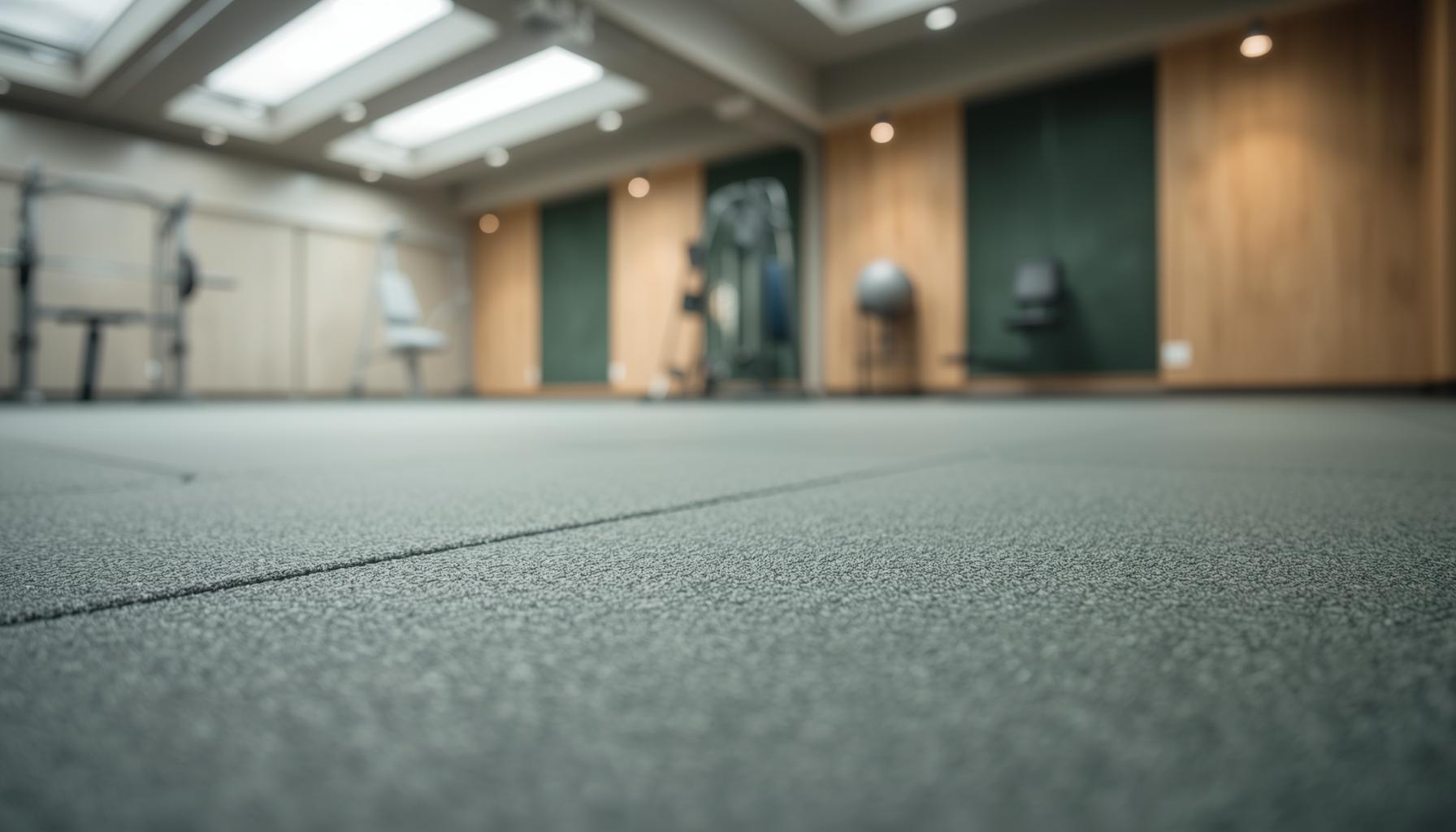
Shock absorption governs athlete safety and return to play. Recycled rubber and natural rubber both achieve critical G‑max and HIC thresholds when specified at appropriate thickness, typically 8–25 mm for strength training zones and thicker for free weights. Acoustic and vibration control is particularly important in multi‑tenant buildings in cities such as London, Manchester and Birmingham. Heavier rubber systems reduce structure borne noise; cork underlays also deliver measurable airborne and impact noise reduction. Slip resistance depends on surface texture and finish. Textured EPDM or vulcanised rubber provides consistent grip for dynamic movement, while linoleum and wood surfaces require regular maintenance and sealed finishes to maintain slip ratings.
Installation methods, maintenance and end‑of‑life
Proper installation extends service life and reduces lifecycle cost. Floating interlocking tiles are the fastest to install and allow phased replacement. Glue‑down rolls and bonded systems provide seamless surfaces for studios emphasizing hygiene. Recommended installation practices for UK operators include surface levelling to SR1 standards, moisture testing to British Standards and acclimatisation of natural materials for 48–72 hours in situ.
Maintenance and sustainable care follow straightforward regimes that keep embodied carbon benefits intact. Regular sweeping and wet mopping with pH neutral cleaners preserve finishes and reduce micro‑abrasion. Avoid aggressive solvents on natural rubber and linoleum. For heavier soiling, low‑moisture extraction and periodic reconditioning extend useful life.
- Routine care: sweep daily, damp mop weekly, targeted extraction monthly.
- Deep care: reseal or recoat natural surfaces every 3–7 years and replace high‑wear modules as needed rather than whole floors.
At end of life, many recycled rubber products are recyclable into surfacing or playground mulch. Natural materials such as cork and linoleum are biodegradable under industrial composting standards or can be downcycled. Reclaimed wood returns to the supply chain when graded and treated. Securing take‑back schemes from suppliers such as Gymflooringuk.co.uk or local recycling contractors reduces disposal costs and landfill.
Procurement, certification and cost lifecycle
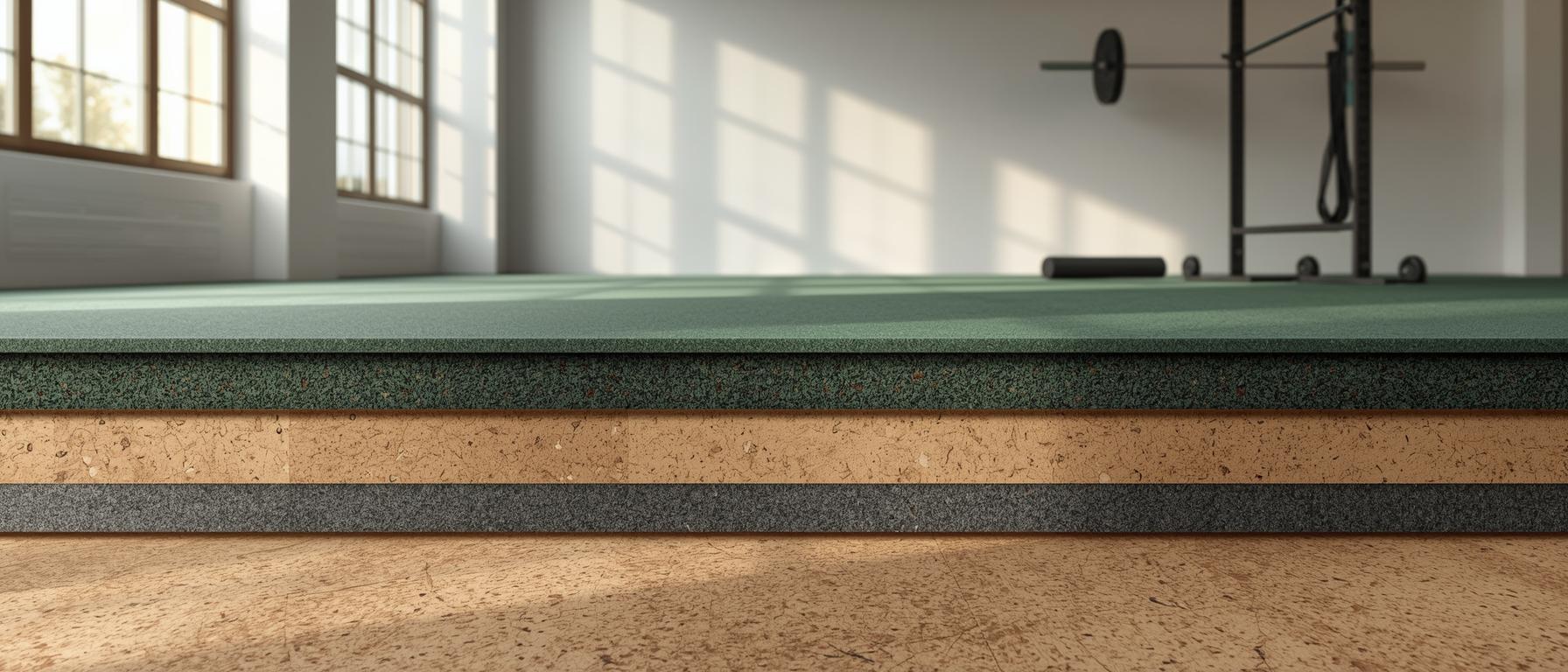
UK procurement should prioritise products with verifiable environmental product declarations, UKCA or CE marking and supply chain responsible sourcing evidence such as FSC or BES 6001. Relevant eco‑labels include BREEAM credits for material procurement and BRE Green Guide ratings. ISO 14001 for manufacturers signals mature environmental management.
Lifecycle costing favours durable resilient systems. For example, a recycled rubber floor at £30/m² with a 15 year life and low maintenance can outperform an initially cheaper laminate choice that requires replacement every 7 years. Capital allowances for fixtures and fittings may offer tax relief for equipment purchases; public sector bodies can access interest‑free retrofit funding through schemes such as Salix for qualifying energy measures and local sustainability grants may help offset capital expenditure for sustainability upgrades.
Sourcing, UK case studies and common questions
Sourcing tips for UK operators include requesting full product technical datasheets, on‑site samples and an independent acoustic and structural review when installing above sensitive spaces. Gymflooringuk.co.uk supplies tiles, rolls and mats with options for recycled content, bespoke colours and installation services tailored to commercial gym fitouts across the UK. Case examples from community leisure centres show that switching to recycled rubber tiles reduced replacement frequency, lowered impact noise by measurable decibels and delivered positive member feedback on comfort.
Common questions concern durability, odour and recyclability. Modern recycled rubber is vulcanised to minimise off‑gassing and odour; allow adequate ventilation during and after installation. For allergy concerns, virgin natural rubber should be specified with allergy information and sealed finishes.
Selecting sustainable gym flooring in the UK requires balancing upfront cost, lifecycle performance and end‑of‑life circularity. Specifying certified materials, planning installation around building constraints and committing to routine sustainable maintenance will deliver long term savings and meet growing regulatory and member expectations.
Additional Information
| Size | 1m x 1m x 18m, Black Ramp ( 1 metre each ), Black Ramp Corner |
|---|---|
| Colour | Black |